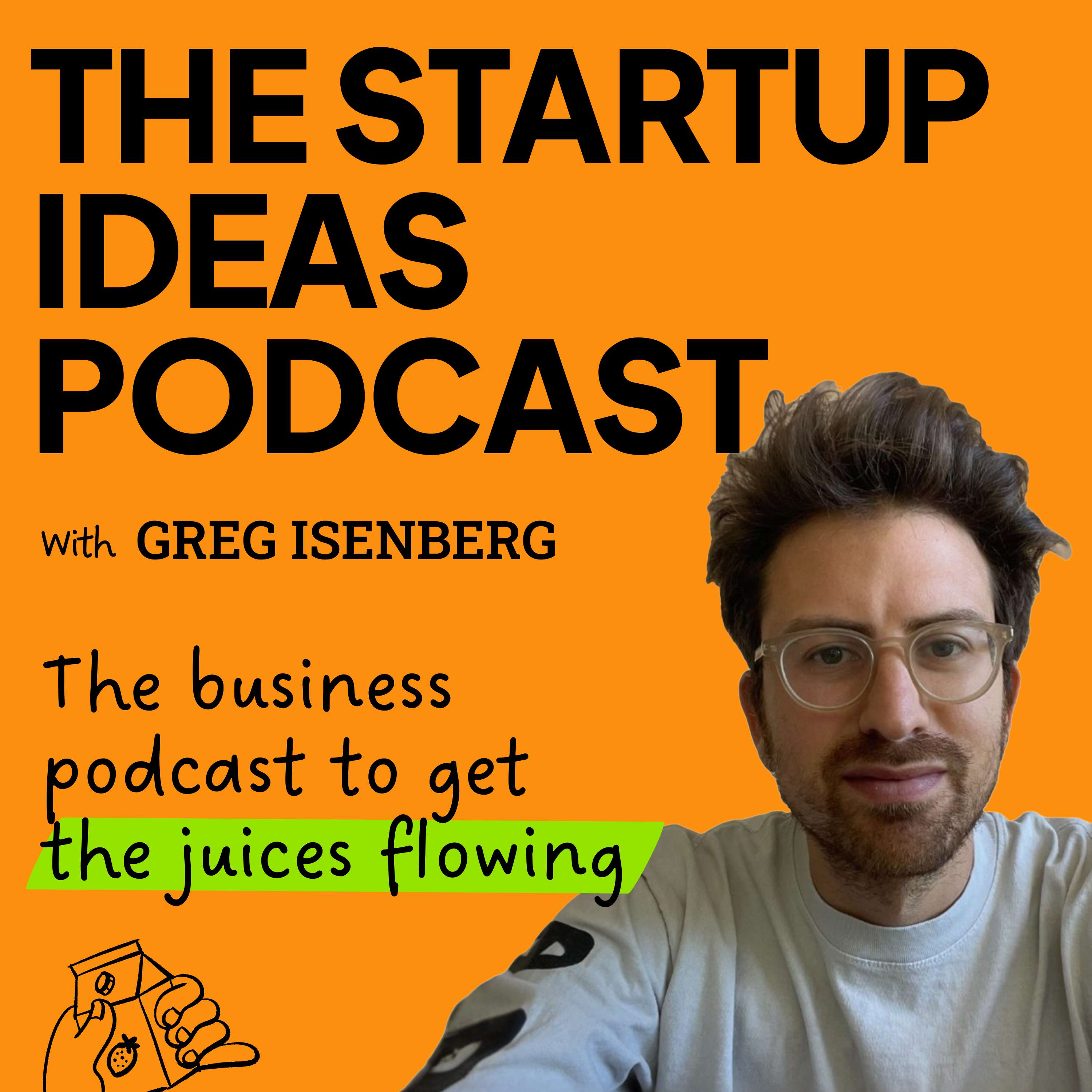
AI Summary
5 min readVin, a friend of the host Greg, came on the show to explain how he uses Obsidian paired with Claude Code as a thinking partner and delegation system. The core insight is that the quality of what an AI agent can do for you is entirely determined by the quality of context you give it. Most people get mediocre results from AI agents because they have to re-explain their projects, preferences, and thinking every session. Vin's solution is to build a personal knowledge base in Obsidian — a collection of interconnected markdown files — and then give Claude Code access to that vault so it can read everything at once, understand the relationships between ideas, and act on that full picture without needing to be reoriented.
The Problem: Agents Need Context, Not Just Prompts
Continue reading the full summary in the app — free to try.
Read Full Summary →Free • No credit card required
Never miss an episode of The Startup Ideas Podcast
Get every new episode summarized in your inbox — free, ~5 minutes to read.
No spam. Unsubscribe anytime.
What you'll learn
- 1 (00:00) **Introduction & Episode Promise** - Greg introduces the episode: pairing Obsidian with Claude Code as a game-changing combination for generating ideas and living better.
- 2 (01:21) **Guest Intro & Learning Goals** - Vin (Internet Vin) joins to teach how to use Claude Code and Obsidian as a thinking partner.
- 3 (02:09) **What is Claude Code?** - Vin explains Claude Code as a command-line agent that can control your computer via natural language.
- 4 (06:44) **What is Obsidian?** - Obsidian is an interface on top of a collection of markdown files (a "vault").
- 5 (10:37) **The Killer Combo: Obsidian CLI + Claude Code** - Obsidian CLI gives Claude Code access to both the files and their interrelationships.
- 6 (12:15) **Custom Commands: The Practical System** - Vin shows his custom slash commands for daily operations.
- 7 (17:40) **How to Create Your Own Commands** - Vin explains that all the slash commands are custom, created by simply asking Claude Code to build them.
+ Full timestamped outline available in the app
Show Notes
I sit down with my dear friend Vin (Internet Vin) for a deep, hands-on walkthrough of how he uses Obsidian and Claude Code together as a thinking partner, idea generator, and personal operating system. Vin demonstrates live how Claude Code can read, reference, and surface patterns across an entire Obsidian vault of interlinked markdown files — turning years of personal notes into actionable insights, project ideas, and even custom commands. This episode covers everything from the basic setup to advanced workflows like tracing how ideas evolve over time, generating contextual startup ideas, and delegating tasks to autonomous agents. If you are serious about getting the most out of LLMs, this is the episode that shows you how your own writing becomes the fuel.
Link to Vin's skills and my notes: https://startup-ideas-pod.link/obsidian-commands
Timestamps
00:00 – Intro
02:10 – What Is Claude Code?
06:45 – What Is Obsidian?
10:28 – Obsidian CLI: Giving Claude Code Access to Your Vault
14:53 – Thinking Tools: Ghost, Challenge, Emerge, Drift, Ideas, Trace
22:51 – The Role of Reflection in Building a Powerful Vault
25:15 – How This Relates to OpenClaw (Autonomous Agents)
29:13 – Live Demo: /Connect — Bridging Two Domains
31:25 – Meeting Notes & External Info
33:23 – Why Vin Keeps a Strict Separation: Human-Written vs. Agent-Written
35:42 – How Claude Code uses Obsidian
41:46 – Live Demo: /Ideas — Generating Actionable Ideas from Your Vault
47:10 – The /Graduate Command
50:29 – Why Obsidian Is the Missing Link for AI Companies
54:53 – The Alpha: Why 99.99% of People Won't Do This
57:38 – Closing Thoughts & Where to Follow Vin
Key Points
- Claude Code is a command-line agent that can control your computer through natural language — and its power multiplies when you feed it rich, persistent context files instead of re-explaining projects every session.
- Obsidian is uniquely valuable because it sits on top of interlinked markdown files; the new Obsidian CLI lets Claude Code see both the files and the relationships between them.
- Vin built custom slash commands (/trace, /connect, /ideas, /ghost, /drift, /challenge) that let him use Claude Code as a thinking partner — surfacing latent patterns, contradictions, and ideas he would never see on his own.
-