AI Summary
5 min readGeorge Bumann, a naturalist and sculptor who leads seminars in Yellowstone National Park, describes how animals use varied vocalizations that carry specific information rather than generic signals. In conversation with the host, he draws on decades of field observation to explain mechanisms such as recombined sound fragments, contextual adjustments, and cross-species listening. The discussion stays grounded in recorded examples from prairie dogs, ravens, turkeys, vervet monkeys, and squirrels, while noting what remains difficult to confirm without long-term tracking.
Complex vocabularies in small mammals
Prairie dogs produce distinct calls that identify particular threats and even human traits. Experiments show separate vocalizations for a walking person versus a running one, for a person in a green shirt versus a red one, and for a dog versus a coyote. When researchers introduced novel objects such as a black plywood shape, the colony generated a previously unrecorded call that was later reused for the same shape. Vervet monkeys similarly maintain separate alarms for aerial predators and ground threats; playback studies confirm that troop members respond by climbing or scanning accordingly. Young animals refine these calls through social correction from adults, indicating both innate templates and learned precision.
Continue reading the full summary in the app — free to try.
Read Full Summary →Free • No credit card required
Never miss an episode of The MeatEater Podcast
Get every new episode summarized in your inbox — free, ~5 minutes to read.
No spam. Unsubscribe anytime.
What you'll learn
- 1 (03:47) **Introduction to George Bumann** - Sculptor, naturalist, and animal language expert who leads seminars in Yellowstone on interpreting wildlife sounds and behaviors
- 2 (05:03) **Live animal vocalization demonstrations** - Turkey, elk bugle, and raven calls performed to illustrate range and meaning
- 3 (09:39) **Prairie dog vocabulary** - Extremely specific alarm calls that distinguish predator type, color, size, speed, and even novel objects like cardboard cutouts
- 4 (13:43) **Vervet monkey call experiments** - Distinct ground vs. aerial threat calls; researchers burned out individuals by repeated playback to test recognition
- 5 (17:20) **Raven territorial and food signals** - Three-note song marks territory; faster, repeated notes signal food and recruit others to overwhelm residents
- 6 (20:15) **Raven golden eagle alarm** - Specific uniform series of notes used only for golden eagles (a direct predator) vs. more inflected calls for bald eagles
- 7 (22:40) **Gobble variations in turkeys** - Not all gobbles are equal; jakes produce full gobbles only when alone, revealing context and dominance status
+ Full timestamped outline available in the app
Show Notes
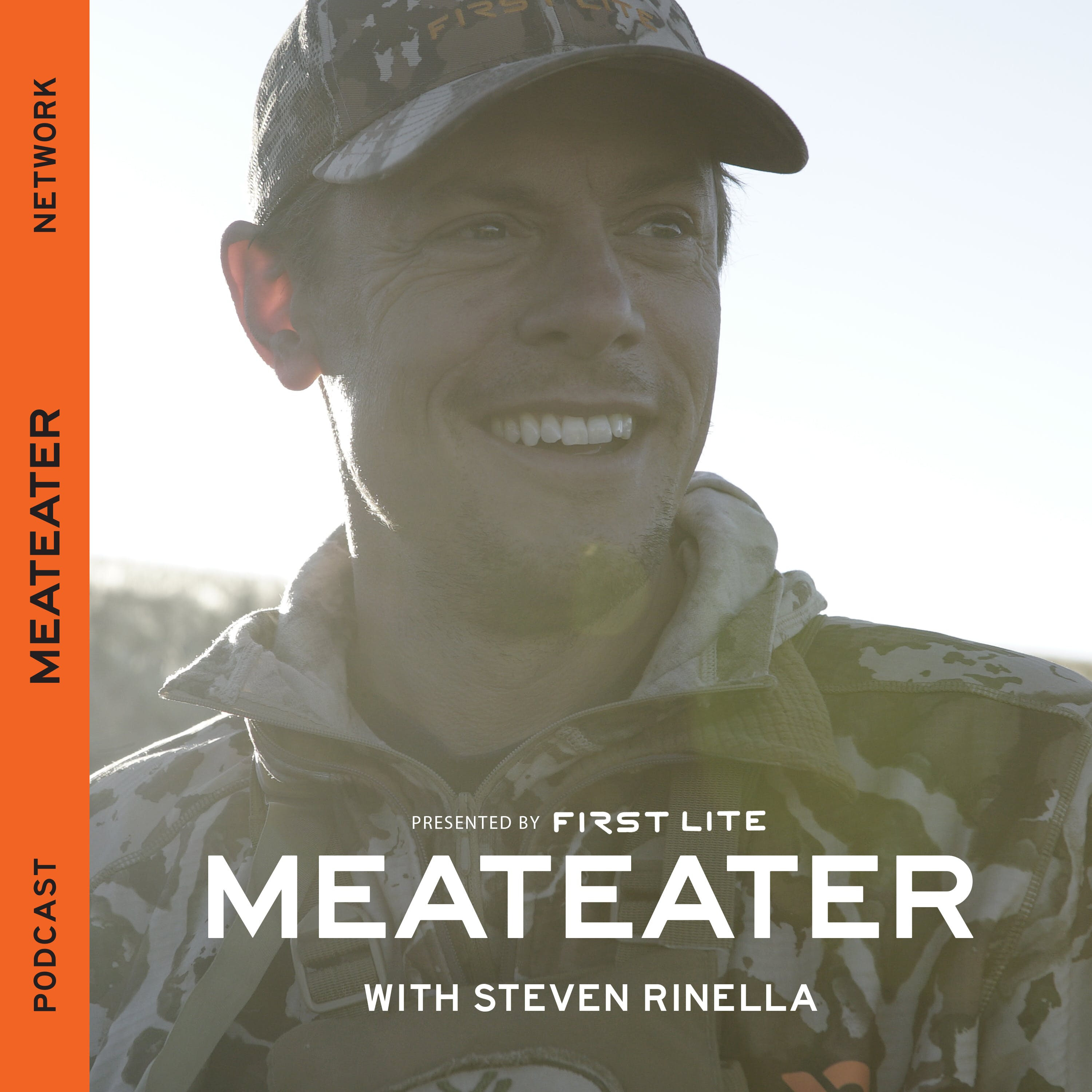
Steven Rinella talks with naturalist, writer, and sculptor George Bumann, Brody Henderson, Phil Taylore, and Corinne Schneider.
Topics discussed: George's book, Eavesdropping On Animals; Animal vocalizations; subscribe to the new Bear Grease YouTube channel; laws on game retrieval; just how pungent skunk odor really is; stay tuned for MeatEater TV's new "12 in 26" hunt series, starting with Jani's Manitoba bear episode; how absurd it is that guys called better than turkeys themselves; what various raven calls mean; how the birds gossip about everything; wolf howling and squirrel chirping translations; all the animals are talking about and know you; silence as the most important alarm that exists; The 2026 Yellowstone Summit; and more.
Connect with Steve and The MeatEater Podcast Network
Steve on Instagram and Twitter
MeatEater on Instagram, Facebook, Twitter, and YouTube
See omnystudio.com/listener for privacy information.
More from this podcast
The MeatEater Podcast →