
AI Summary
5 min readHere is the podcast summary based on the transcript.
The European Space Operations Centre (ESOC) in Darmstadt is the nerve center for Europe’s planetary defense efforts. Richard Moissl, head of the ESA’s Planetary Defence Office, explains that the field has undergone a fundamental shift in the last decade. It has moved from theoretical concepts and cataloging near-Earth objects to actively testing deflection technologies, establishing international warning chains, and preparing for a unique scientific opportunity with the asteroid Apophis in 2029.
From Cataloging to Kinetic Impact
The core of planetary defense has always been detection. The number of discovered near-Earth objects has grown exponentially thanks to more dedicated telescopes, better camera hardware, and advanced computational methods like synthetic tracking. The upcoming Vera C. Rubin Observatory will act as a "dragnet," dramatically increasing the discovery rate. However, the real turning point came in 2022 with NASA’s DART mission. DART was a kinetic impactor—a spacecraft that deliberately crashed into the moonlet Dimorphos to test whether we could alter an asteroid's orbit.
Continue reading the full summary in the app — free to try.
Read Full Summary →Free • No credit card required
Never miss an episode of Raumzeit
Get every new episode summarized in your inbox — free, ~5 minutes to read.
No spam. Unsubscribe anytime.
What you'll learn
- 1 RZ127 Planetary Defence – Timestamped Navigation Outline
- 2 (00:34) **Introduction & Guest Background** - Tim welcomes Richard Moissl, head of ESA's Planetary Defence Office, and discusses his career path from academic research to ESA
- 3 (08:10) **International Coordination & Why It Matters** - Planetary Defence requires global cooperation because Earth rotates and asteroids come from any direction
- 4 (10:10) **Progress Over the Last Decade** - Detection capabilities, orbit determination, and deflection concepts have all advanced dramatically
- 5 (12:11) **The DART Mission – A Turning Point** - NASA's kinetic impactor test in 2022 proved asteroid deflection works, but with surprises
- 6 (16:14) **Why DART Changed the Conversation** - The unexpectedly high efficiency revealed both opportunities and limitations
- 7 (18:57) **How Detection Has Improved** - More telescopes, better hardware, and new computational methods drive discovery
+ Full timestamped outline available in the app
Show Notes
Das Verteidigung der Erde gegen zerstörerischen Asteroiden ist eine weltumspannende Aufgabe
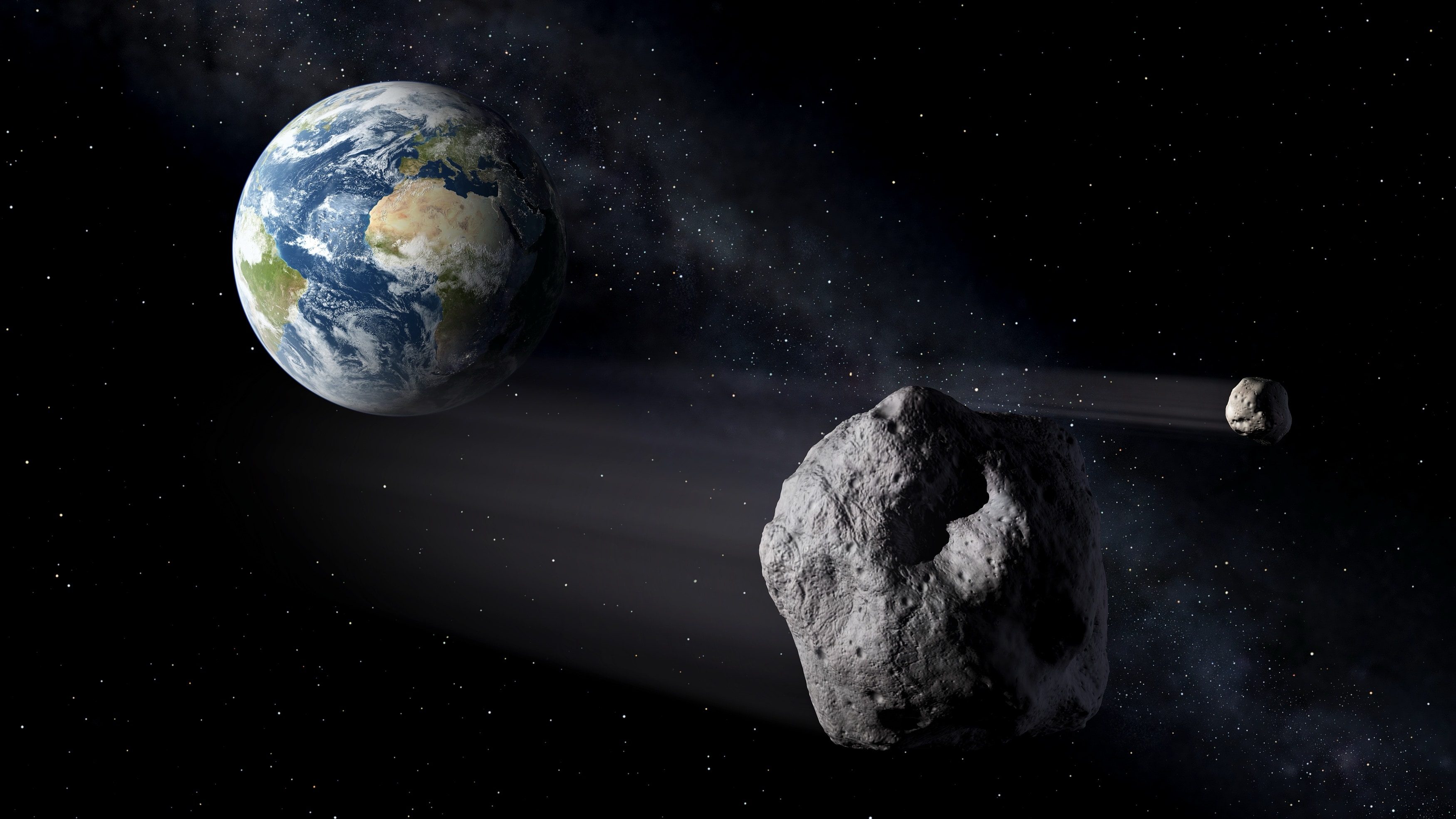
Auch wenn das All so leer wirkt birgt es große Gefahren für die Erde, denn eine Kollision mit einem größeren Asteroiden könnte verheerende Auswirkungen haben. Das Planetary Defence Office der ESA hat diese Gefahren im Blick und führt neben der permanenten Beobachtung des Weltraums wichtige Missionen durch, um Informationen zu gewinnen und mögliche Strategien zu erarbeiten, die im Falle eines Falles zur Anwendung kommen könnten. Die Raumsonde RAMSES ist die nächste Mission die hier zum Einsatz kommt und schaut sich den großen Asteroiden Apophis genauer an, der demnächst knapp an der Erde vorbei rauscht.
Dauer:
Aufnahme:

Richard Moissl |
Richard Moissl ist der Leiter des Planetary Defence Office der ESA, die sich der internationalen wissenschaftlichen Kollaboration und Beobachtung von und Forschung an Asteroiden und anderen erdnahen Objekten verschrieben hat, um im Ernstfall gewappnet zu sein, sollte eines dieser Objekte auf Kollisionskurs mit der Erde gehen. Er berichtet von den Aufgaben und Herausforderungen dieser Tätigkeit und welche Missionen derzeit und in Zukunft weitere Erkenntnisse liefern sollen.
Für diese Episode von Raumzeit liegt auch ein vollständiges Transkript mit Zeitmarken und Sprecheridentifikation vor.
Bitte beachten: das Transkript wurde automati
More from this podcast
Raumzeit →