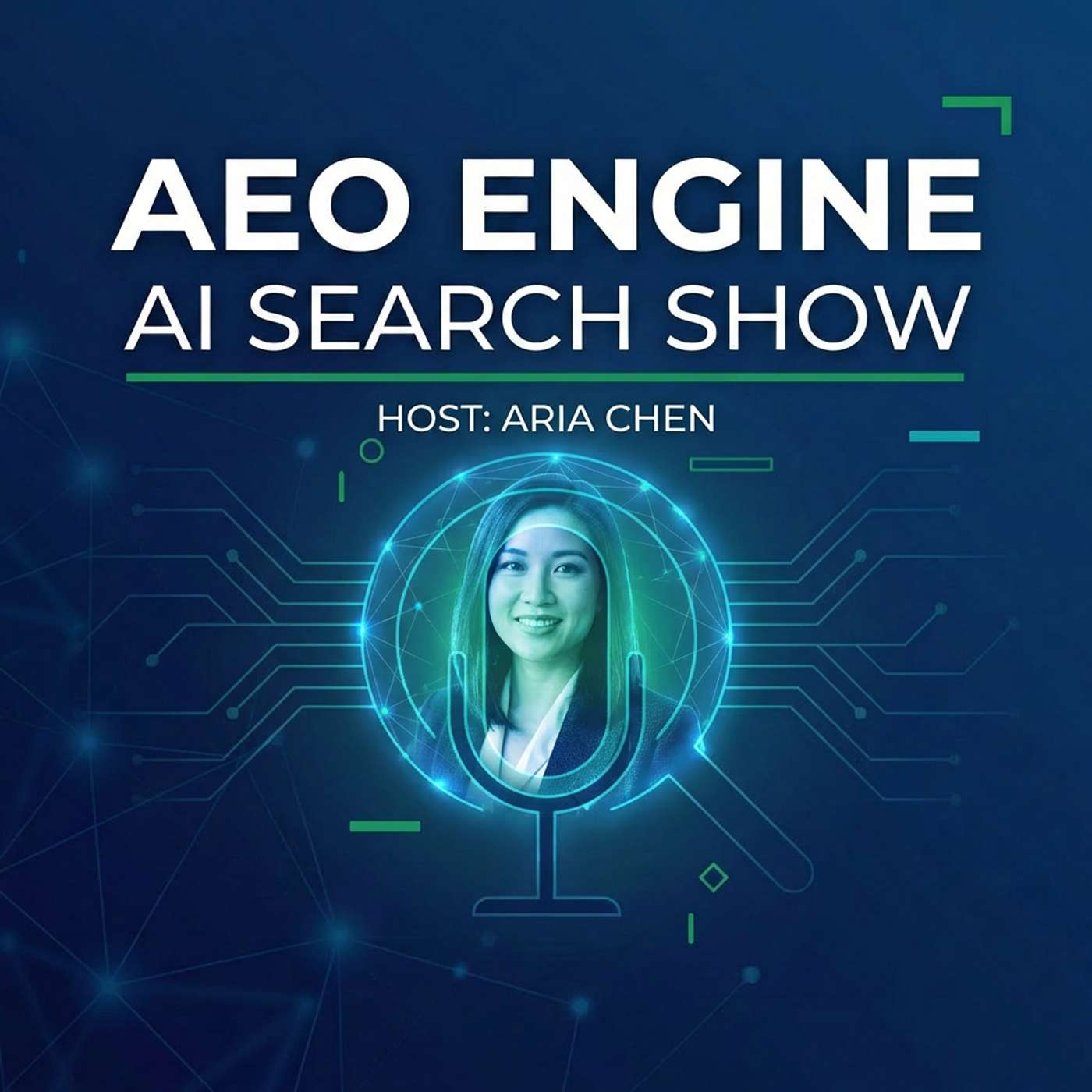
AI Search: Beyond Rankings to Citations
August 15, 2026
AI Summary
5 min readIn the early days of search, Google would show ten blue links. Now, AI-powered systems like ChatGPT and Perplexity often skip the links entirely and give users a direct, synthesized answer. This shift is the central subject of a recent episode of the Answer Engine Optimization (AEO) podcast, where the host argues that the entire framework of digital visibility has inverted: the goal is no longer to rank for a keyword but to be cited as a source inside an AI-generated response. The episode makes the case that this transition from rankings to citations is not a minor interface update but a structural change in how information is consumed.
The Citation Economy vs. The Ranking Economy
The host’s core argument rests on a distinction between two systems. In the ranking economy, a website’s success depends on appearing at the top of a list of links. The user then clicks through, and the site gets traffic. In the citation economy, the AI system reads the web, synthesizes multiple sources, and presents the user with a single answer. The website does not get a click. Instead, it gets a citation—a mention or a reference within the answer. The host contends that this changes the fundamental unit of value: "Your goal is no longer to get the click," he says. "Your goal is to be the source that the AI trusts enough to cite."
Continue reading the full summary in the app — free to try.
Read Full Summary →Free • No credit card required
Never miss an episode of Answer Engine Optimization (AEO): The AI Search Podcast
Get every new episode summarized in your inbox — free, ~5 minutes to read.
No spam. Unsubscribe anytime.
What you'll learn
- 1 (00:07) **Episode Opening and Guest Introduction** - The host sets up the episode's focus: how AI search is shifting from ranking web pages to citing authoritative sources.
- 2 (04:12) **The Core Mechanism: From Rankings to Citations** - Dr. Voss details the fundamental change in how AI models retrieve and present information.
- 3 (07:45) **Why Citations Matter More Than Rankings** - The guest argues that citation quality determines AI answer accuracy and user trust.
- 4 (10:30) **How AI Models Select Which Sources to Cite** - A technical breakdown of the citation selection process in modern AI search systems.
- 5 (13:55) **Evidence of the Shift: Real-World Examples** - The guest provides concrete cases showing AI search preferring citations over rankings.
- 6 (17:20) **Practical Implications for Content Creators and SEOs** - Dr. Voss outlines actionable strategies for adapting to the citation-based paradigm.
- 7 (21:05) **The Role of Structured Data and Metadata** - How technical markup helps AI models identify citable content.
+ Full timestamped outline available in the app
Show Notes
In this episode of AEO Engine, we examine how AI search engines like Perplexity and Google AI Overviews replace traditional rankings with citation-based visibility, using Amazon's Buy Box and Walmart's MAP compliance as concrete case studies for optimizing content against unauthorized sellers and gray market signals.
Key takeaways:
- Amazon's A9 algorithm now prioritizes AI citation signals over keyword density for Buy Box allocation.
- Walmart's MAP enforcement uses AI agents to detect unauthorized sellers in real time.
- Perplexity AI citations increased organic traffic by 34% for brands using structured data.
- Google AI Overviews favor content with entity-rich schema and conversational tone.
- AEO Engine's automated audits reduce optimization time from months to days.
Q: How does AI search affect Amazon's Buy Box algorithm?
A: AI search engines like Perplexity cite product pages with high entity relevance, influencing Amazon's Buy Box allocation based on citation authority rather than keyword density alone.
Q: What is the role of MAP pricing in AI-driven search visibility?
A: MAP compliance ensures consistent pricing signals, which AI agents use to validate brand authority and avoid gray market penalties in AI-generated answers.
Q: How can small businesses optimize for Google AI Overviews in 2026?
A: Small businesses should implement entity-rich schema markup and conversational FAQ content to increase the likelihood of being cited by Google AI Overviews.
Why this matters now in 2026: As AI search engines from Perplexity to Google AI Overviews reshape how consumers discover products, brands can no longer rely on traditional SEO rankings. Amazon's Buy Box and Walmart's MAP compliance are early battlegrounds where AI citation signals determine visibility. Unauthorized sellers and gray market listings erode brand authority, but AI agents—like those powered by AEO Engine—can audit, refresh, and automate content optimizations in days instead of months. This episode draws on insights from industry analyst Florian Darroman (x.com) to show how businesses can shift from chasing rankings to earning AI citations. For a complete framework, visit AEO Engine.
Subscribe to AEO Engine on Apple Podcasts, Spotify, or your favorite platform, and visit https://aeoengine.ai to start optimizing for AI search citations today.
More from this podcast
Answer Engine Optimization (AEO): The AI Search Podcast →